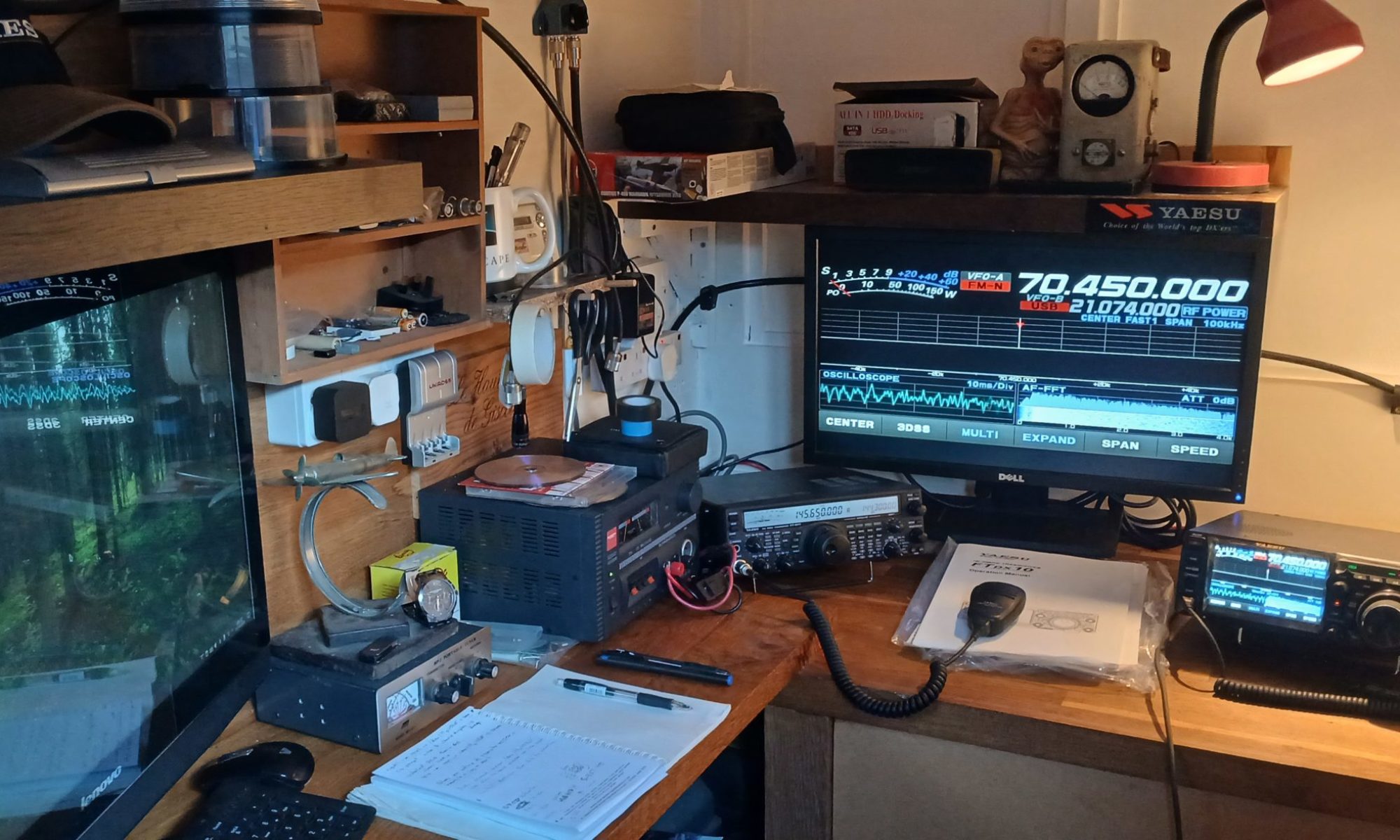
I noticed that my last posting was in May 2025, this did not mean I was idle at this QTH. Both Mike (M0AWS) and Steve (M0XVT) kept asking when I was going to update my site as I had various projects on the go!!
I as usual was operating HF happily in the evening and closed the station down as usual, however the next day in the afternoon when I went to operate my station again I found the CG3000 unresponsive (Relay Click was not present!) when I powered it via the control box that it was supplied with when bought at ML&S.
Usual checks was then followed to see if there was a power supply issue using my multimeter. I confirmed power was present at the ATU end so this issue was with the device itself.
I placed a call with ML&S and spoke to Gary (Workshop) regarding my problem. I needed to send the ATU back to them. My decision was to drive to ML&S with faulty ATU and handover for repair.. I also asked Mike (M0AWS) if he wanted to come along as he lives only 3 Miles away and he agreed and offered to drive as he wanted to drop off his FTDX10 he was selling. Well 2.5Hrs drive from Suffolk, we arrived at their site.
I duly handed the unit over and then we had a discussion on whether this was still covered under warranty and was happy that they confirmed this was.
We spent sometime looking at the various offerings whilst there and as always enjoyed a coffee that was offered to us.. I also bought a HH.. Blog to come on that.
The next day after dropping the ATU for repair, I received a call from ML&S (Gary) who informed me that it was fixed and was on it’s way back to me via DHL. The cause was a faulty plug-in chip (PD8255A Programmable Peripheral Interface) that was duly replaced and Gary tested that the ATU was fully operational and tuned a wire in their workshop.
Within three-days I received a fully operational ATU back at my QTH with the offending faulty chip. My thanks to all the team at ML&S for such a quick turnaround.
I was back in action on the HF bands again a very happy chappie..
Further blog on what possibly was the cause of the ATU defect in Part 2…..